
If you’ve been lying awake counting the hours instead of sheep, you’re not alone. Millions of people struggle to fall asleep, stay asleep, or wake up feeling rested — and many are looking for options beyond another prescription. At Roman’s Wellness Center, we believe real sleep support starts with helping the body do what it was designed to do naturally, without dependency or harsh side effects.
Below, the Roman’s team of experts are breaking down some of the most effective natural approaches to better sleep, from halotherapy and acupuncture to sleep patches, supplements, and the daily habits that tie it all together.
Why Sleep Struggles Often Start With the Body, Not Just the Bedroom
Most sleep advice focuses on the bedroom: cooler temperatures, blackout curtains, no screens before bed. All of that matters. But in Traditional Chinese Medicine, sleep is also viewed as a reflection of how well the body’s internal systems — especially the liver — are functioning.
According to this framework, the hours between 1 a.m. and 3 a.m. are considered “Liver Time,” a window when the body is believed to focus on filtering toxins and restoring balance. Waking during this window, or struggling to fall into a deep sleep at all, is often associated with liver qi stagnation, which can be influenced by stress, alcohol, irregular eating, or emotional tension carried throughout the day.
This is part of why a holistic approach to sleep can look different from simply “trying harder” to fall asleep. Supporting the body’s natural detox rhythms, calming the nervous system, and releasing physical tension can all play a role in helping sleep come more easily.
Halotherapy: Salt Room Therapy for Deeper Rest
Halotherapy, also known as salt therapy, involves spending time in a room infused with micronized salt particles. Historically inspired by the naturally salt-rich air of European salt caves, halotherapy has become a popular addition to modern wellness routines.
While research is still developing, many people report that time in a salt room helps them:
● Breathe more freely by supporting clearer airways
● Reduce nighttime coughing or congestion that interrupts sleep
● Relax more deeply, thanks to the calming, meditative environment of the salt room itself
Because halotherapy is non-invasive and drug-free, it’s often used as a gentle complement to other sleep support strategies rather than a stand-alone fix. At Roman’s, we also offer Halo Biophotonic Light Therapy, which uses targeted light frequencies to support cellular energy and relaxation — another tool some clients pair with their evening wind-down.
Acupuncture for Sleep: What the Research Shows
Acupuncture for sleep is one of the more well-studied natural approaches available today. A 2025 meta-analysis of nearly 760 patients found that acupuncture led to meaningful improvements in sleep quality and insomnia severity scores compared to sham treatment, with both manual acupuncture and electroacupuncture outperforming placebo. Additional research has shown similar benefits specifically for menopause-related insomnia, including increased total sleep time and reduced time spent awake after initially falling asleep.
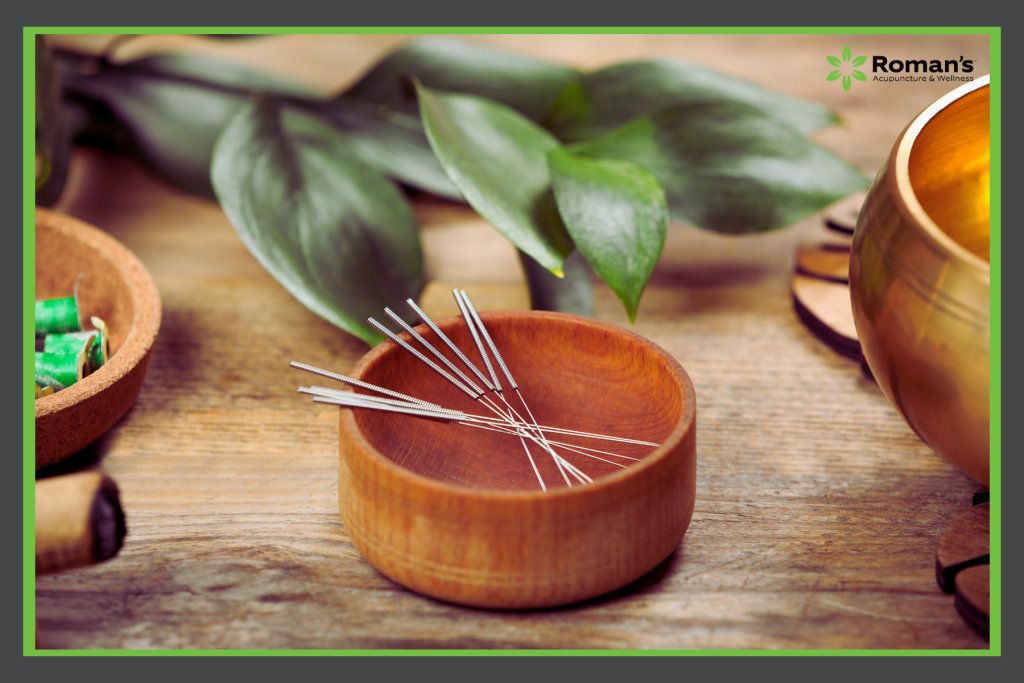
In Traditional Chinese Medicine, acupuncture for sleep works by targeting specific points believed to calm the nervous system, ease tension, and restore balance to the body’s energy pathways. Unlike sleep medication, it carries no risk of dependency, which makes it an appealing option for people looking for sleep support that works with the body rather than sedating it.
Massage Therapy: Releasing the Tension That Blocks Sleep
It’s hard to fall into deep, restorative sleep when your shoulders are up around your ears. Massage therapy helps release the physical tension that builds up from stress, poor posture, or a long day on your feet, while also encouraging the parasympathetic “rest and digest” response the body needs to wind down.
Regular massage has also been associated with lower cortisol levels and improved circulation — both of which can make it easier for the body to transition into a genuinely restful state at night.

Wearable Sleep Patches: What They Are (and What to Know)
Sleep patches are a relatively new entrant in the natural sleep support space. These small adhesive patches are worn on the skin and designed to deliver ingredients like melatonin or magnesium gradually overnight, rather than all at once, the way a pill or gummy typically does.
Here’s what the evidence currently suggests:
● Melatonin patches have shown the most promise. Early research found transdermal melatonin to be comparable to oral melatonin in helping people fall asleep, with some studies reporting increased REM sleep and reduced nighttime wakefulness.
● Magnesium patches are less clearly supported. Magnesium deficiency is genuinely linked to poor sleep and a harder time calming the nervous system, but how well magnesium actually absorbs through the skin is still debated among researchers.
Sleep patches won’t work for everyone, and they’re best viewed as one option among several rather than a guaranteed fix. If you’re curious whether they might fit into your routine, it’s worth talking it through with a practitioner familiar with your full health picture.
Sleep Supplements: Natural Support Without the Side Effects
For people who’d rather avoid sleep medications altogether, natural sleep supplements offer a gentler starting point. Some of the most commonly used include:
● Melatonin helps signal to the body that it’s time to wind down, especially useful for resetting an irregular sleep schedule
● Magnesium supports nervous system regulation and muscle relaxation
● L-theanine, an amino acid found in tea that promotes calm without drowsiness
● Valerian root and chamomile are traditional herbal options long used to ease the mind before bed
Because natural sleep supplements work with the body’s own chemistry instead of forcing sedation, they typically come with a lower risk of next-day grogginess or dependency compared to prescription sleep aids. That said, “natural” doesn’t mean “one-size-fits-all” — the right supplement, and the right dose, depend on your individual needs.
How Can You Build a Better Sleep Schedule?
No patch, supplement, or treatment can fully make up for an inconsistent sleep schedule. The body thrives on rhythm, and a few consistent habits can make every other sleep support strategy work better:
● Keep a consistent bedtime and wake time, even on weekends, to reinforce your body’s internal clock
● Dim the lights and step away from screens an hour before bed to support natural melatonin production
● Avoid alcohol and heavy meals late at night, both of which can disrupt the deep sleep your body needs during those early morning hours
● Create a wind-down ritual — light stretching, breathwork, or a few minutes of quiet can signal to your body that it’s time to shift gears
Small, consistent changes to your sleep schedule often make the biggest long-term difference, especially when paired with therapies that address the root causes of poor sleep rather than just masking the symptoms.
Ready for a Natural, Non-Addictive Path to Better Rest?
Better sleep doesn’t have to mean choosing between “toughing it out” and reaching for medication. Halotherapy, acupuncture for sleep, massage, sleep patches, and natural sleep supplements each offer a different way to support your body’s own ability to rest and recover — without the risk of dependency.
If you’re in the Morgantown area and ready to explore natural sleep support that’s tailored to you, we’d love to help you build a plan that fits your life. Contact us online or call or text Roman’s Wellness Center at 304.322.0093 to schedule a consultation and take the first step toward the rest you deserve.